How do we make it right, when we do wrong?
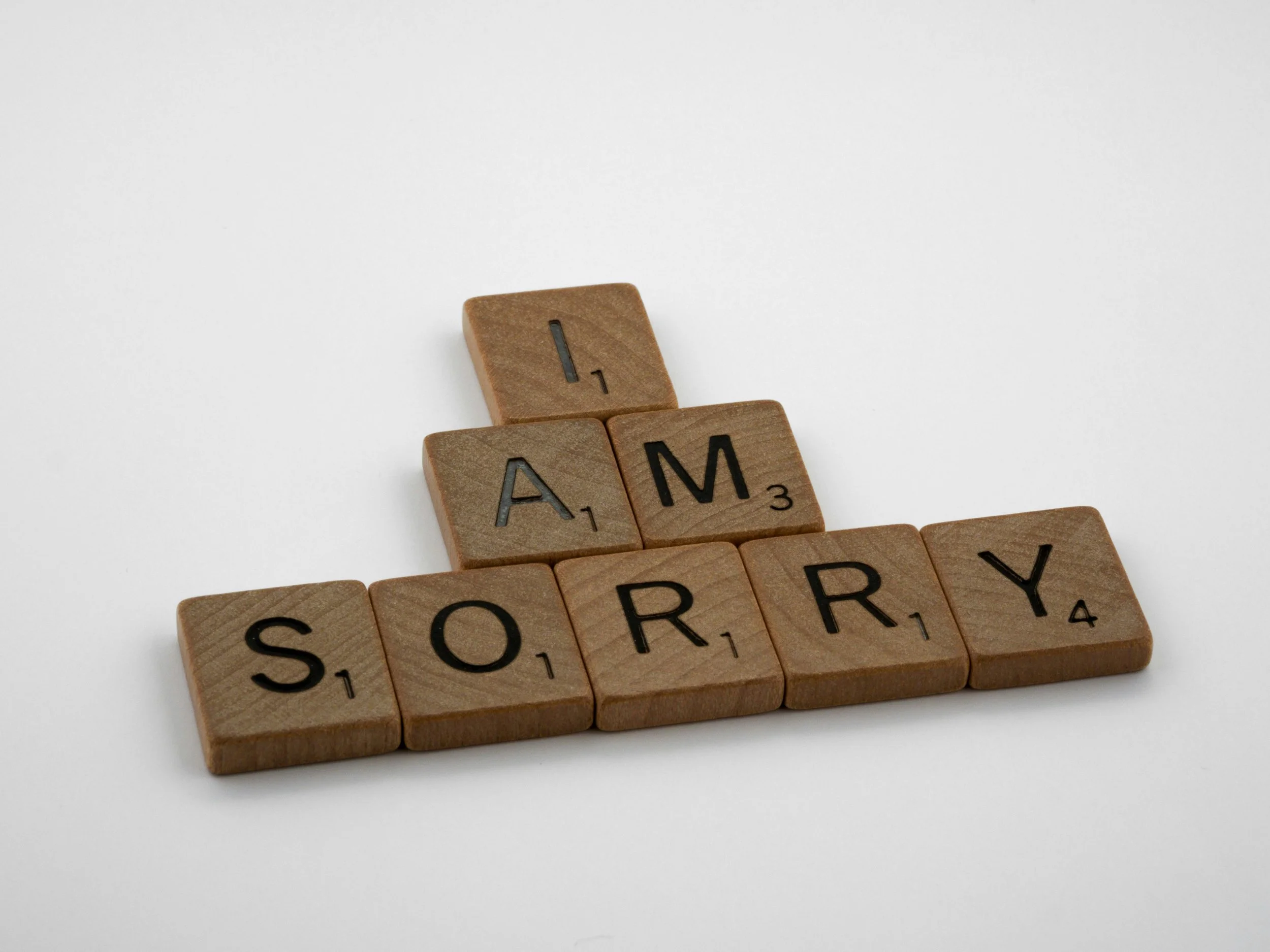
Somehow, I missed the lesson on how to say I'm sorry when I was growing up.
It wasn't until my forties that a loved one sat me down and offered me something I hadn't known I needed. "Wendy," he said, "saying you're sorry that you made someone feel bad is not an apology. You need to say: I'm sorry for what I did."
I've thought about that conversation many times since. It wasn't unkind — it was clarifying. And it made me realize how many of us were never really taught this skill. We absorbed apologies that began with "I'm sorry if you felt..." or "I'm sorry, but I was just trying to..." And without knowing it, we passed those half-apologies along, generation to generation, wondering why they never quite healed what they were meant to heal.
We're human. We make mistakes. We say things and do things we wish we hadn't. We let people down. The question isn't whether we'll have something to apologize for — it's whether we know how to do it well.
A bad apology adds insult to injury
Organizational psychologist Adam Grant, in conversation with trust researcher Beth Polin on his podcast, WorkLife, put it plainly: a bad apology is a second insult. And I think most of us have been on the receiving end of one — the non-apology that somehow leaves us feeling worse than before.
So what makes an apology effective? Polin's research points to five essential elements, what she calls the 5 R's of a trust-restoring apology.
Regret — genuinely expressing remorse for the harm caused. Not a performance of sorrow, but an authentic acknowledgment that something you did caused pain. “I see that my words deeply hurt you.”
Rationale — explaining, briefly and honestly, how the misstep happened. Not a list of justifications, not blame-shifting, but context. There’s a big difference between "I was overwhelmed and I took it out on you" and "You made me feel like I had no choice." One opens a door - the other closes it.
Responsibility — If you can only offer one element, make it this one. Taking full ownership of the impact of our actions, regardless of our intentions. “I take responsibility for what I said.” We are responsible for what we do, even when we mean well.
Repentance — truly committing to change. Not "I'll try to do better," but a thoughtful examination of what needs to shift in how you show up. “I’m going to practice pausing to prevent leashing out in anger.”
Repair — taking action to restore what was damaged. Words matter, but they are rarely enough on their own. What can you actually do to make things right? Our actions in the future are the best apologies for our mistakes of the past.
What my kid helped me understand
Not long ago, I told my 25-year-old that I was truly sorry for the times I lost my temper when they were young — for becoming, as I called it, a screamy meamy mommy. Their response stopped me in my tracks.
"Mom," they said, "you always owned it when you lost it. You said you were sorry. I remember that more than the times you lost it."
What they were describing wasn't perfection. It was accountability — the practice of returning, again and again, to take responsibility for my impact. And somehow, that had mattered more than I ever knew.
It's a reminder that good apologies aren't reserved only for dramatic ruptures or watershed moments. They are a daily practice. A habit of the heart. And over time, that habit becomes part of how the people we love experience us — not as someone who never got it wrong, but as someone who kept showing up to make it right.
A skill worth learning
Lewis Howes has said that he wishes he'd known earlier that apologizing is a sign of strength. I believe that too. It takes courage to set aside our defensiveness, our need to be understood, our impulse to explain ourselves. It takes something even more: the willingness to put the relationship — and the other person's wellbeing — ahead of our own discomfort.
When we apologize well, we're saying: you matter to me more than my ego does.
This is a skill, not a personality trait. It can be learned, practiced, and refined. In my experience as a coach working with individuals and couples, it is one of the most quietly transformative things a person can develop — in their relationships, in their families, and in how they move through the world.
What would it feel like to make it right, even after getting it wrong? If you're navigating a relationship rupture or simply want to show up better for the people who matter most, I'd love to offer a complimentary discovery session. Reach out — I'm here.
With warmth,
Wendy